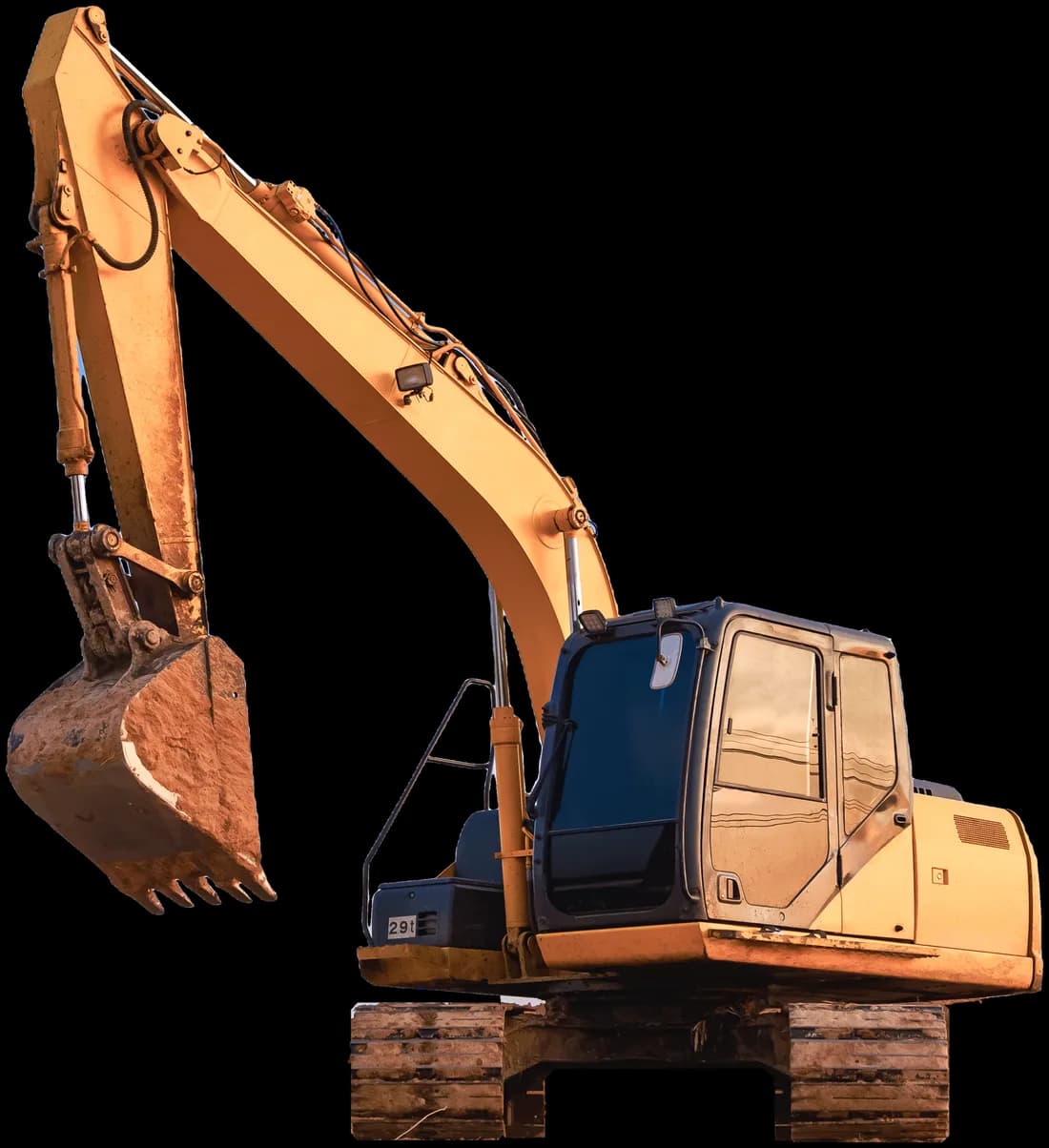
Forestry Mulching for Thicker Woods
Once the understory is gone, owners often spot sweetgum thickets or crowded cedars they'd rather lose too. Same machine, often the same week. See our forestry mulching for wooded acreage.
View Forestry Mulching
Land Clearing
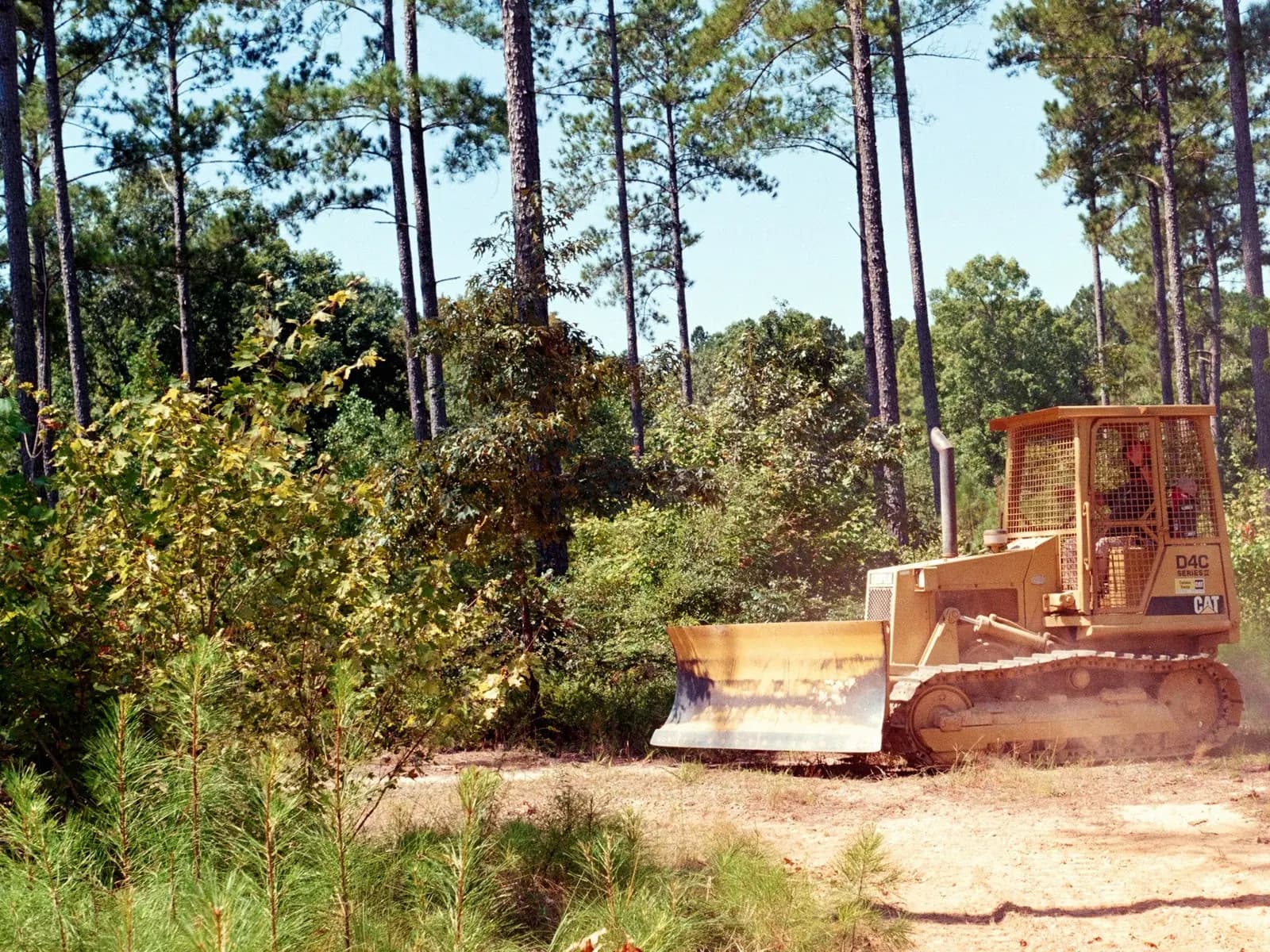
Brush clearing that takes out the privet, honeysuckle, briars and saplings choking your woods, and leaves standing the oaks, poplars and hickories you want to keep.
Google ReviewsBrush clearing under a canopy is a different job than knocking down an overgrown field. The goal is to take out the understory, the Chinese privet, bush honeysuckle, multiflora rose, greenbrier and sapling thickets, while the mature trees above it come through without a scarred trunk. Superior Land Management is a Knoxville land clearing and excavation company based in north Knox County, and underbrush removal is one of the land clearing services we run most, from Halls out to House Mountain. Owner Chandler Humphrey walks your woods with you, you flag the keepers, and he works the mulching head between the trunks himself. You end up with woods you can walk, hunt and see through, with no burn piles to babysit. Call or text Chandler at (865) 412-7121 to set up a walk-through.
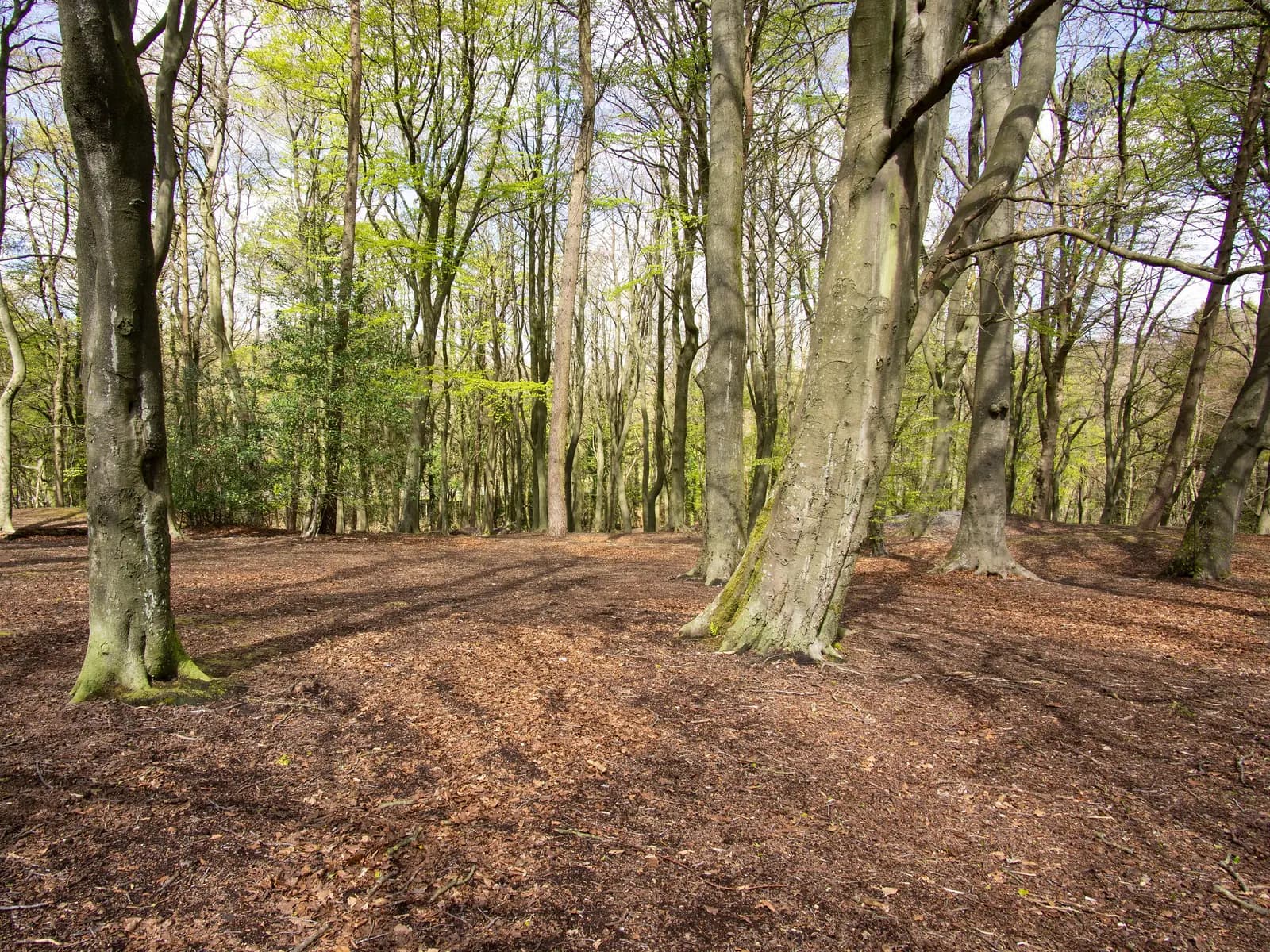
Privet and honeysuckle leaf out earlier and hold leaves later than native plants, so every season they shade out more of the forest floor. Wait a few years and a one-day job becomes a thicket you can't see 20 feet into, with saplings too big to treat as brush and vines climbing the trees you meant to save.
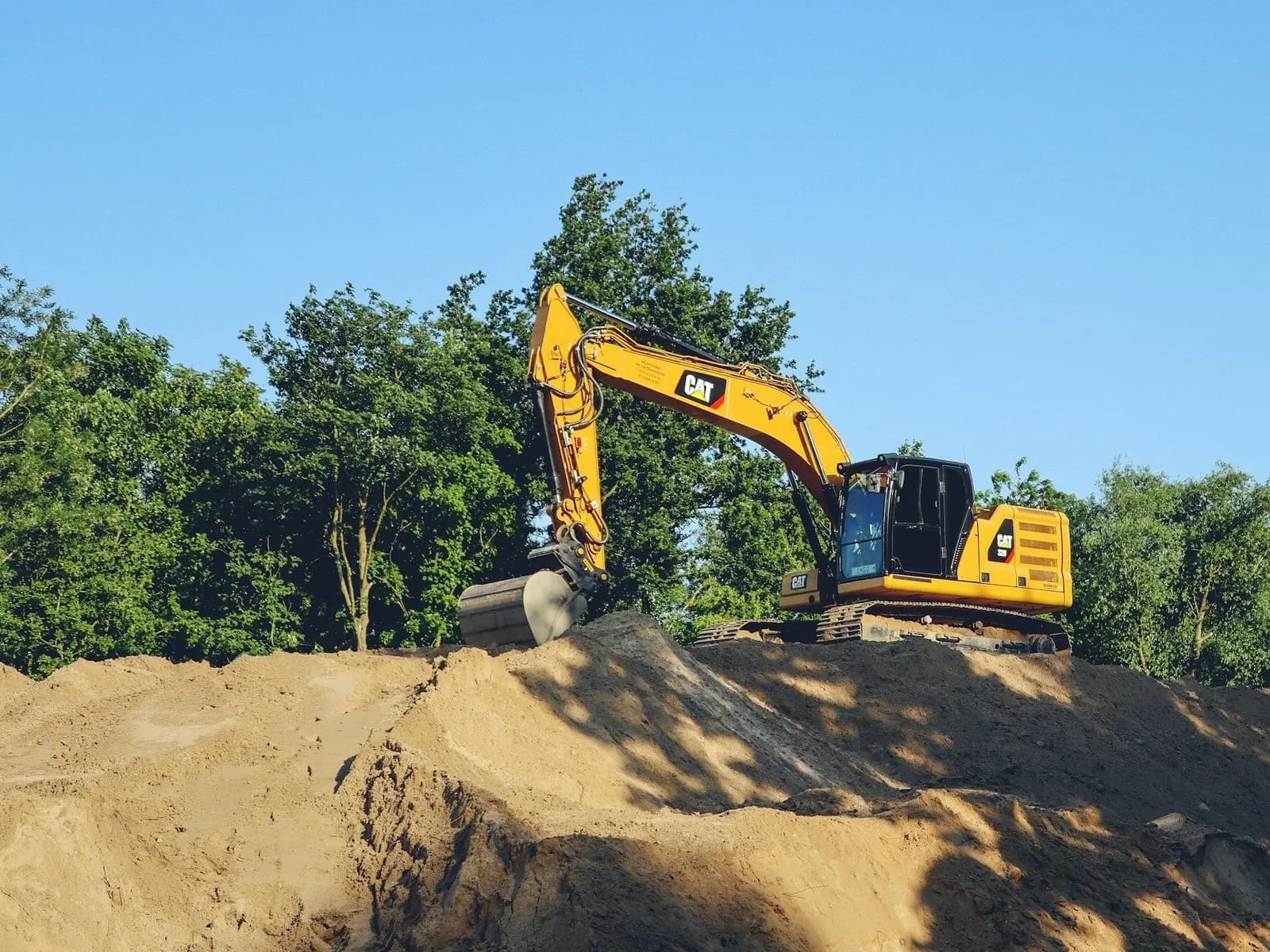
Underbrush clearing means removing the shrubs, vines, briars and small trees growing beneath the canopy while leaving the mature, healthy trees standing and the ground covered.
Before a machine unloads, Chandler walks the woods with you and you agree on what stays. Keeper trees get flagged with ribbon, and so does anything else you want protected: a dogwood, a spring, a fence, a tree stand, a property pin. This is where you decide between a park-like open understory or just trails and lanes, and it's what the quote is built on.
The heavy work is done with a forestry mulching head on a Caterpillar excavator. A drum of fixed teeth grinds brush, vines and saplings into chips where they stand. Because the head is on an arm, Chandler can reach between keeper trees or down a creek bank without tracking over every root. That's why we use an excavator-mounted head for clearing brush and small trees in the woods: less traffic over root zones and finer control around bark. Most saplings up to about 6 to 8 inches across go through the head.
Brush growing right against a trunk is no place for a machine. The crew cuts it by hand with chainsaws and loppers and cuts climbing vines at the base so the tops die back. Cut material is spread so it doesn't pile against bark. You don't need to be home while we work, as long as gates are open and pets and livestock are put up.
Residential brush clearing often starts at the house and works outward. We clear brush, briars and low saplings back from your home, barn and outbuildings so there's open, mowable ground between the woods and the walls. Less brush against buildings is a basic fire-safety step, and it gives you room to see snakes and run a mower. How far back we go is your call.
Privet and bush honeysuckle walls
Chinese privet and bush honeysuckle are two of the most common invaders in Knox County woods and fencerows, and both are on the Tennessee Invasive Plant Council's list of invasive plants. Mulching takes out the top growth in one pass, but both resprout from the root crown.
Multiflora rose, briars and autumn olive in old woods edges
On land that was pasture a generation ago, the woods edge is usually a band of multiflora rose, blackberry and autumn olive with cedars and sweetgum coming through. If the open ground beyond it is gone to brush too, brush mulching for overgrown fields is the better fit for that part of the job.
Vines in the canopy
Japanese honeysuckle, grapevine and kudzu climb into edge trees, add weight that brings limbs down in ice storms, and shade the crown. Cutting them at the base gives keepers a better chance.
The regrowth question
Privet, honeysuckle, autumn olive and sweetgum come back from roots after mulching. The mulch layer slows them down, but lasting control takes a follow-up. UT Extension's invasive plant guide (W1198) covers identification and treatment options. We don't spray herbicide. If you want resprouts treated, use a licensed pesticide applicator, or we can come back for a maintenance pass.
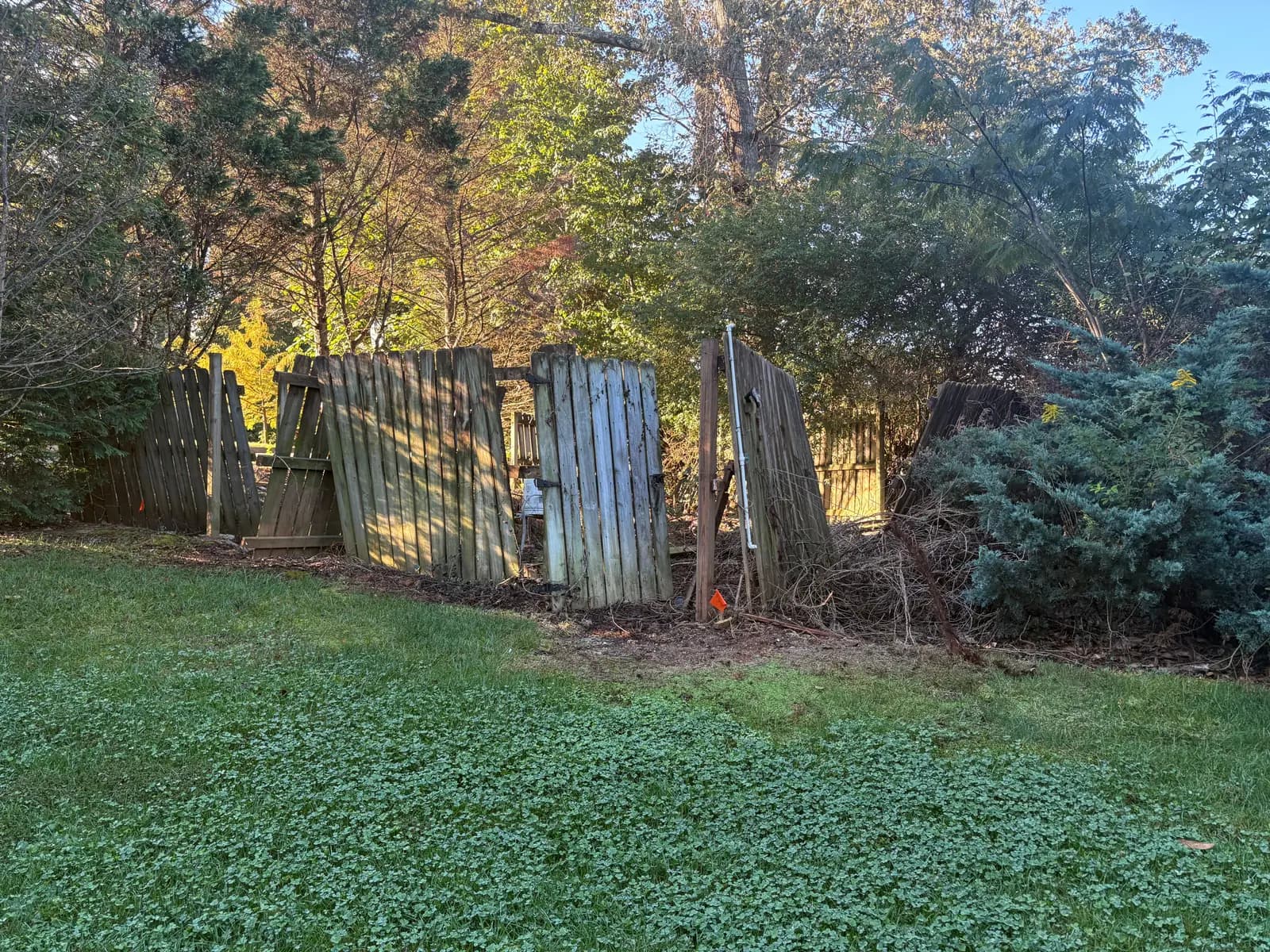
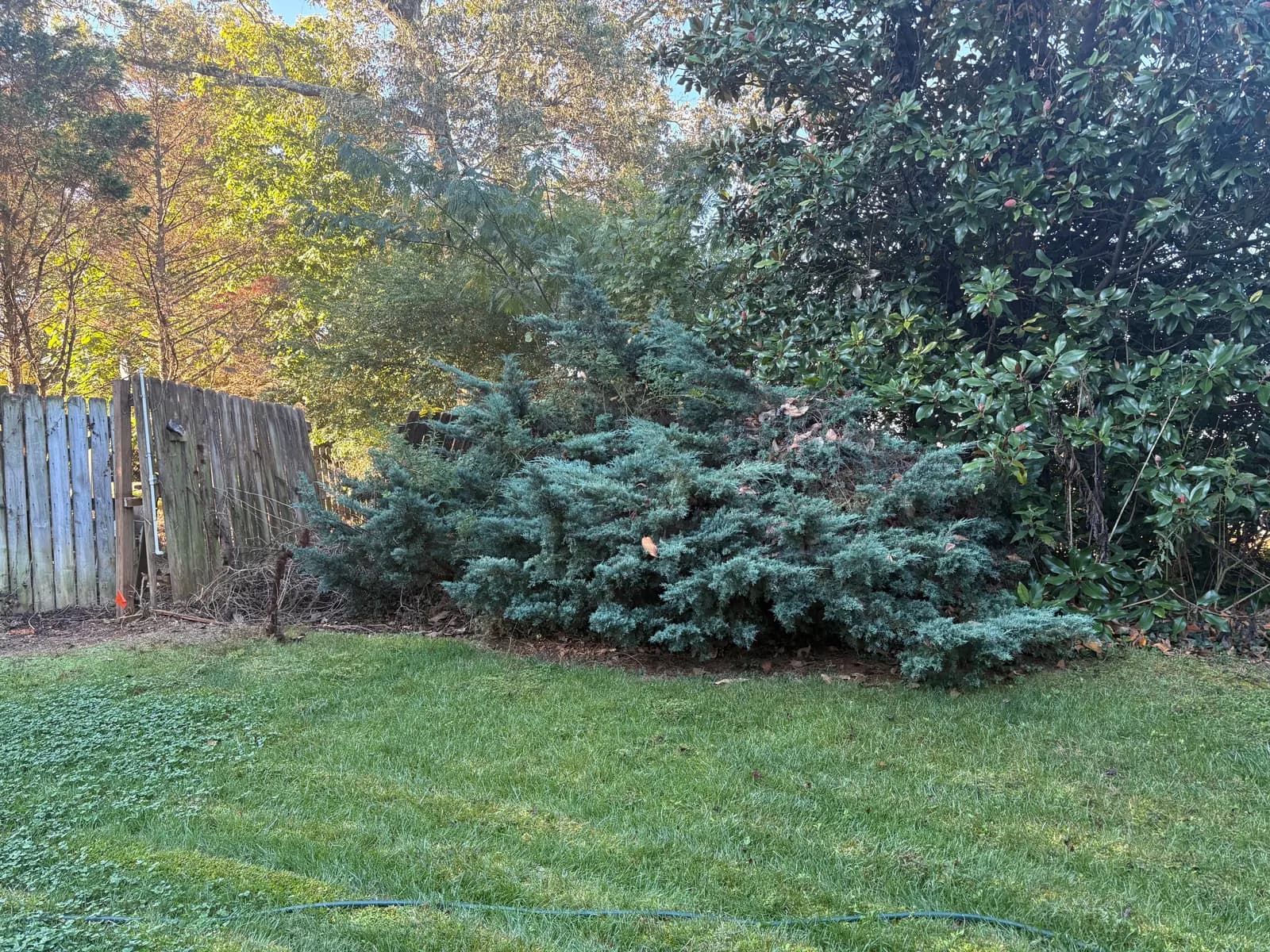
Nothing gets cut until you and Chandler have walked the woods and flagged the keepers. The flags are the plan, and the crew works to them.
Chandler Humphrey has run Superior Land Management since 2021, and he's the one on the mulching head working inches from your trees. He learned forestry mulching from a mentor he still works alongside, and he mulches interstate right-of-way for TDOT around highway signs.
Your quote lists machine time, hand work and anything quoted separately, so you can compare bids line by line.
If something isn't right after we leave, call and we come back to fix it. Chandler would rather take an extra half day working carefully around keepers than leave a job he has to explain later.
We're a four-person crew working out of north Knox County. You can learn about Chandler and the crew before you call.
Chandler meets you on the property, walks the area and talks through how open you want it. Estimates are free. Access, slope and brush density set how many machine days the job takes.
Keeper trees and anything else you want protected get flagged with ribbon. Your itemized quote spells out the area, machine time, hand work and exclusions, and nothing is scheduled until you've agreed to it.
The mulching excavator does the bulk of the underbrush clearing, grinding privet, honeysuckle, briars and saplings where they stand. Reaching between trunks keeps tracks off root zones, and on wet red clay we'd rather wait a day than rut your woods.
The crew follows with saws for brush tight to trunks and cuts vines at the base. Mulch stays spread as a layer to cover the soil and slow erosion and regrowth, with nothing piled or burned.
Chandler walks the cleared area with you, checks every flagged keeper, and touches up anything while the machine is still on site. You get an itemized invoice that matches the quote and a plain answer on what will resprout.
We price underbrush work by the machine day, because the same acre can take two hours or two days depending on density and keepers. Forestry mulching runs $2,000 per machine day. If you're after brush clearing cost per acre, we can give a per-acre figure once we've seen the woods. If you want the cheapest number in the county, we're probably not your crew. If you want your keeper trees still standing and healthy when we leave, we are.
Estimates are free. Properties over an hour out may carry a $200 estimate fee, credited to the job.
Once the understory is gone, owners often spot sweetgum thickets or crowded cedars they'd rather lose too. Same machine, often the same week. See our forestry mulching for wooded acreage.
View Forestry MulchingWith the woods open, the brushy field next door looks worse. Open fields and fence lines mulch faster since there are no keepers to work around. Read about brush mulching for overgrown fields and fence lines.
View Brush MulchingClearing underbrush often shows where a house or cabin would fit. Building needs stumps out and the ground grubbed, and we can take it to pad and footers with lot clearing for new home sites.
View Lot ClearingWe work out of north Knox County and cover about 50 miles from there, across Knox, Loudon, Sevier, Jefferson, Grainger and Hamblen counties. Corryton and House Mountain are a short run east across north Knox County. Blaine is up US-11W (Rutledge Pike), and Morristown is further out the same road or by I-40 and I-81. Jefferson City is east on US-11E (Andrew Johnson Highway) through Strawberry Plains and New Market.
Need brush clearing in Sevierville? It's I-40 East to Exit 407 and Winfield Dunn Parkway, where understory often hides the mountain views. Looking for underbrush removal in Lenoir City? It's I-40/I-75 west to Exit 81. Residential brush clearing inside Knoxville comes off I-75, I-640 and Maynardville Highway. Everywhere, it's red clay that ruts when wet, limestone ledges on ridges, and privet in nearly every woods. Call (865) 412-7121 to get on the schedule.
Based in Knoxville, TNService-area business, about 50 miles around Knoxville. Pins open each area page.
View us on GoogleWe price by the machine day, because density and keeper trees change the time more than acreage does. Forestry mulching runs $2,000 per machine day. After a free walk-through, Chandler gives you an itemized quote with the days estimated.
A few acres of moderate privet and honeysuckle is often a one- or two-day job; dense thickets, steep ground and lots of keeper trees take longer. Your quote includes the expected days.
Keepers are flagged before we start, and the excavator-mounted head reaches between trunks so the machine doesn't have to drive over every root. Brush tight against bark is cut by hand. You pick the trees that stay, and Chandler is the one running the machine near them.
Underbrush removal is selective work under a canopy you're keeping, with slower, careful machine work and hand cutting around trunks. Brush mulching is for open ground gone to brush, like fields, fence lines and ditch banks, where everything in the area goes. We can quote both on one walk.
A forestry mulching head on a Caterpillar excavator does the main work, plus chainsaws and hand tools around keepers. The head grinds material into mulch that stays on the ground, so there are no burn piles and no haul-off.
No. Once keepers are flagged and the scope is signed, we need gates open and pets and livestock put up. Chandler keeps you posted by call or text.
We return if anything's wrong. Call and Chandler will come back to look at it and make it right.
Still have a question about brush clearing? Call (865) 412-7121.
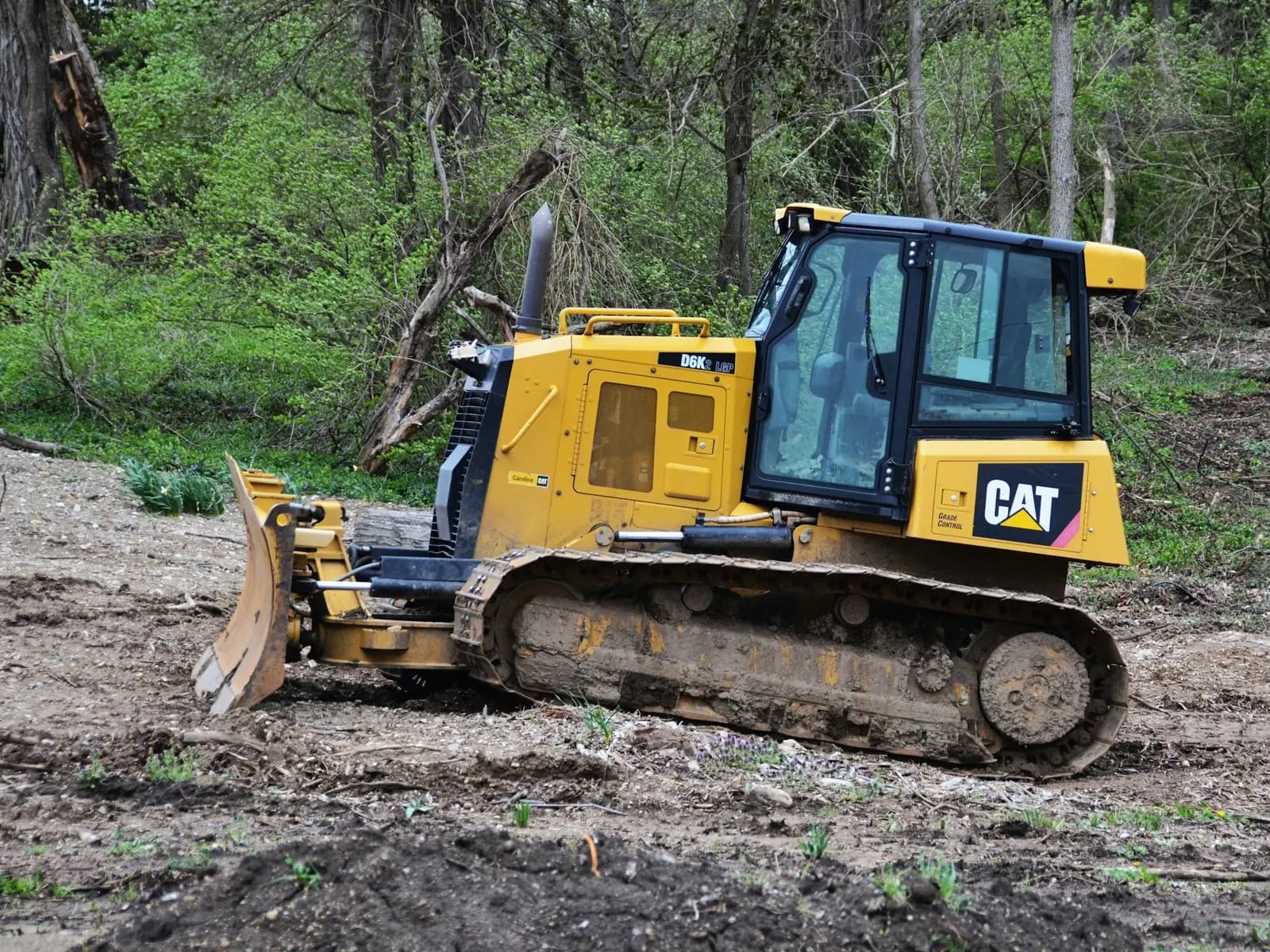
The first step is a walk through your woods with Chandler to flag what stays and talk through what goes. You'll have an itemized quote before anything is scheduled.
Prefer to write it out? Use our contact page to send details about your property.
Open 24/7, including storm cleanup and emergencies